





Asthma and Allergy Center
Asthma and Allergy Center
Chronic Obstructive Pulmonary Disease (COPD)
COPD
(Chronic Obstructive Pulmonary Disease):
early detection is important.
An estimated 3 million people in Korea have COPD, but
awareness of the disease is low, and fewer than
3% actually receive treatment.
Chronic Obstructive Pulmonary Disease
COPD(Chronic Obstructive Pulmonary Disease) risk factors
Inhaling toxic substances causes a persistent inflammatory response in the airways,
which narrows the airways and
gradually leads to airway obstruction
-


Smoking
-


Air pollution
-


Dust and harmful gases
-


Genetic predisposition
When you should visit the hospital
Check Point !
-
01

When a cough persists
Frequent coughing and a small amount of sticky sputum
are present together -
02

When working in a hazardous environment
In an environment that gives off harmful gases or dust,
with continuous exposure -
03

When you are often short of breath
Becoming short of breath with even slight movement,
making daily life difficult -
04

When you are a smoker
Long-term direct or secondhand
smoking
※ If any one of the above applies,
chronic obstructive pulmonary disease should be suspected, and
it is best to be examined by a specialist.
Types of COPD
Types of COPD


When the alveoli of the lungs are damaged, air becomes trapped inside the lungs and
the lungs lose their elasticity.
As a result, the exchange of oxygen and carbon dioxide
does not proceed smoothly and breathing becomes difficult.
VS


When inflammation persists in the bronchi, the airways constrict and
mucus is secreted excessively.
As a result, airflow through the narrowed airways
is obstructed and breathing becomes difficult.


Tests and Diagnosis for COPD
COPD testing and diagnosis
COPD must be diagnosed early if lung function is to be preserved.
If you have smoked or been exposed to secondhand smoke for a long time, have a COPD test.

- Pulmonary function
- To distinguish it from other conditions,
chest X-ray and
chest CT are performed together

- Blood test
- Measures the concentration of oxygen and carbon dioxide
in the blood to
assess lung
function

- Pulse oximeter
- Non-invasively measures, through the skin,
blood oxygen
saturation

- Exercise test
- While the patient does light walking exercise,
breathing capacity is
measured to assess the
severity of COPD
How to treat COPD
COPD treatment methods
Based on extensive clinical experience and up-to-date knowledge
we provide treatment specialized for chronic obstructive pulmonary disease.
-

Smoking cessation
It cannot restore lung function that has been damaged, but
it can prevent lung function from deteriorating further. -

Medication therapy
Bronchodilators, inhaled corticosteroids and other medications
are used to control symptoms. -

Vaccination
To reduce complications such as influenza and pneumonia and the
risk of death that comes with them, vaccines are administered. -

Pulmonary rehabilitation
Through rehabilitation therapy that strengthens the respiratory muscles,
Quality of life can be improved. -

Oxygen therapy
Oxygen is given for 15 hours or more a day to improve lung function,
exercise capacity and mental health.
COPD treatment: why Kwangdong!
Check Point !
Based on extensive clinical experience and up-to-date knowledge
We provide accurate individualized treatment and lifestyle correction.
-

Medical staff from Seoul National University Hospital
Formerly of the Department of Allergy, Seoul National University Hospital,
appeared on EBS Myungui (Master Doctors),
author of “What You Have Been Enduring Is an Allergy”
Professor Cho Sang-heon provides care in person. -

Lifestyle modification education provided
So that you can stay healthy after returning home,
we provide tailored lifestyle-correction education. -

University hospital-level screening system
In comfortable, convenient facilities
and with university hospital-level diagnostic equipment,
you can experience care of the highest standard.
Ph.D. in Internal Medicine, Seoul National University College of Medicine
Professor Cho Sang-heonprovides care in person


01
- Appeared on EBS Myungui (Master Doctors)
- the episode “Your Daily Life Is Falling Apart: Allergic Rhinitis”
02
-
Former) Seoul National University Hospital
Professor, Department of Allergy and Clinical Immunology - Former) Director, Institute of Allergy and Clinical Immunology, Seoul National University
03
- “What You Have Been Enduring Is an Allergy”
- and many other publications
The Final Destination of Allergy Treatment
The final destination for asthma and allergy treatment
We continuously research severe allergic diseases that have been difficult to treat
and complex allergic conditions.
-

[Anti-asthmatic effect of atorvastatin
through regulation of macrophage activation] -

[Cytokine induction and intracellular signaling
profiles induced by dsRNA and SEB stimulation
in macrophages
and epithelial cells] -

[Retrospective analysis of
electronic medical records
in inpatients:
transfusion-related
acute adverse reactions -
incidence and clinical features] -

[In patients with rituximab
hypersensitivity,
comparison of a single-concentration
desensitization protocol and
a stepwise-dilution desensitization
protocol] -

[Based on raw adverse drug reaction report data:
analysis of drug-induced anaphylaxis cases] -
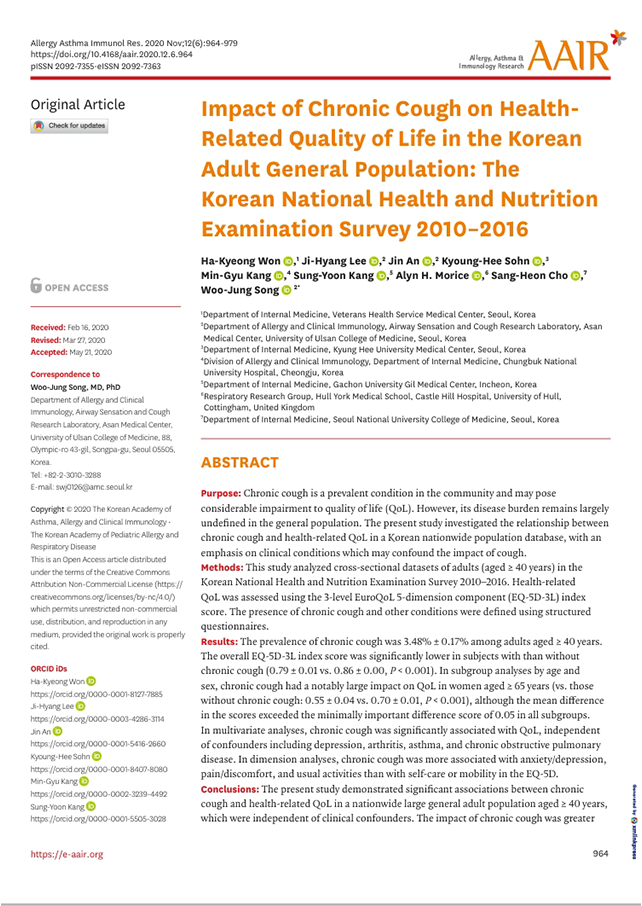
Impact of chronic cough on health-related
quality of life in Korean adults:
the 2010-2016 Korea National Health and Nutrition Examination Survey
University hospital-level medical system
University hospital-level testing and
care system in place


Comfortable and convenient
consultation and inpatient rooms
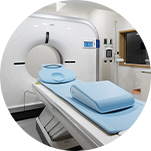
University hospital-level
diagnostic equipment

At every stage of testing and treatment,
specialist medical staff

Personalized
treatment programs