





Internal Medicine/Wellness Center
Internal Medicine / Integrative Wellness Center
Peripheral Neuropathy Clinic
Peripheral Neuropathy Clinic
Peripheral Neuropathy Clinic
From facial nerve palsy to numbness in the hands and feet,
for a wide range of peripheral nerve disorders
we provide accurate diagnosis and appropriate treatment.
Through same-day collaborative care across Neurology, Rehabilitation Medicine and Korean Medicine,
you can receive the best, more specialized treatment.
Types of Peripheral Neuropathy
Types of peripheral neuropathy
These are disorders that occur in the nerve network running from the spine
to the nerve endings in the muscles, skin and elsewhere,
causing symptoms such as numbness, pain and dulled sensation.
-


Facial palsy
-
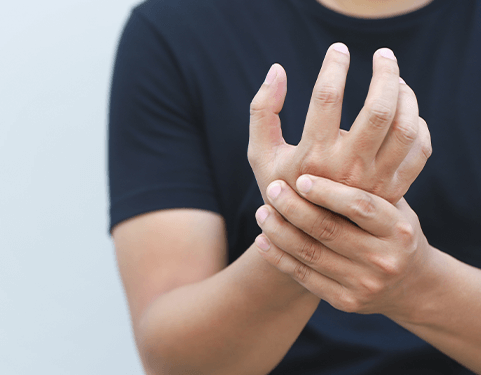

Carpal tunnel syndrome
-


Trigeminal neuralgia
-


Occipital neuralgia
-


Diabetic neuropathy
-

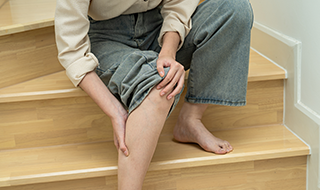
Guillain-Barré syndrome
-


Myasthenia gravis
-

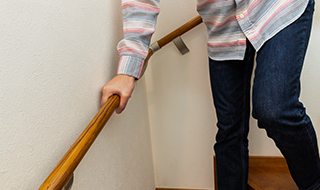
Peripheral neuropathy
Facial Palsy
Main symptoms of facial palsy
This refers to symptoms in which one side of the face becomes paralyzed and moves unnaturally,
with the eye and mouth becoming crooked,
and it can occur in anyone of any age or sex.
Facial palsy checklist
Facial Palsy vs. Normal Face: Symptom Comparison

-
When I look in the mirror in the morning,
one side of my face looks strange. -
My mouth pulls to one side.
-
Even when I try to close my eyes,
one eye will not close. -
Even when I try to wrinkle my forehead,
one side will not lift.
What if these symptoms appear as well?
Slurred speech, numbness in the arms and legs
→ Stroke possible
Pain behind the ear, hearing problems
→ Shingles (herpes zoster) possibly related
Early treatment is very important for facial palsy.
Within 24 to 72 hours after onset,
it is essential to receive care from a neurologist,
and prompt treatment can minimize after-effects.
Is facial palsy
caused by a stroke?
When facial palsy occurs, people suspect ‘stroke’, which is a central facial palsy,
but most cases are peripheral facial palsy.
However, if you are able to wrinkle your forehead or
able to close your eye,
there is a high likelihood of central facial palsy.
For an accurate differential diagnosis,
Along with diagnosis by a neurologist,
neurological examinations and brain imaging studies are needed.

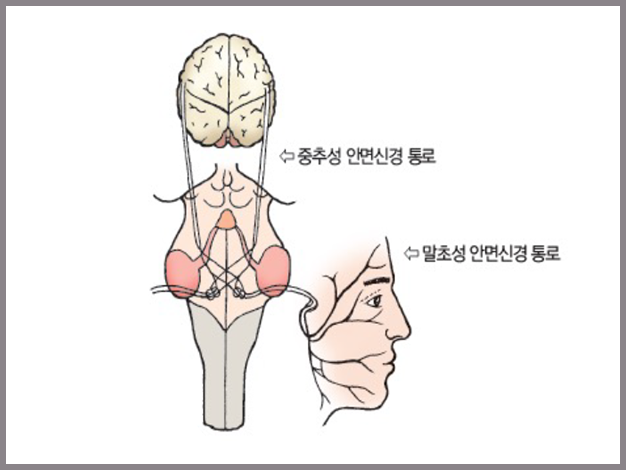
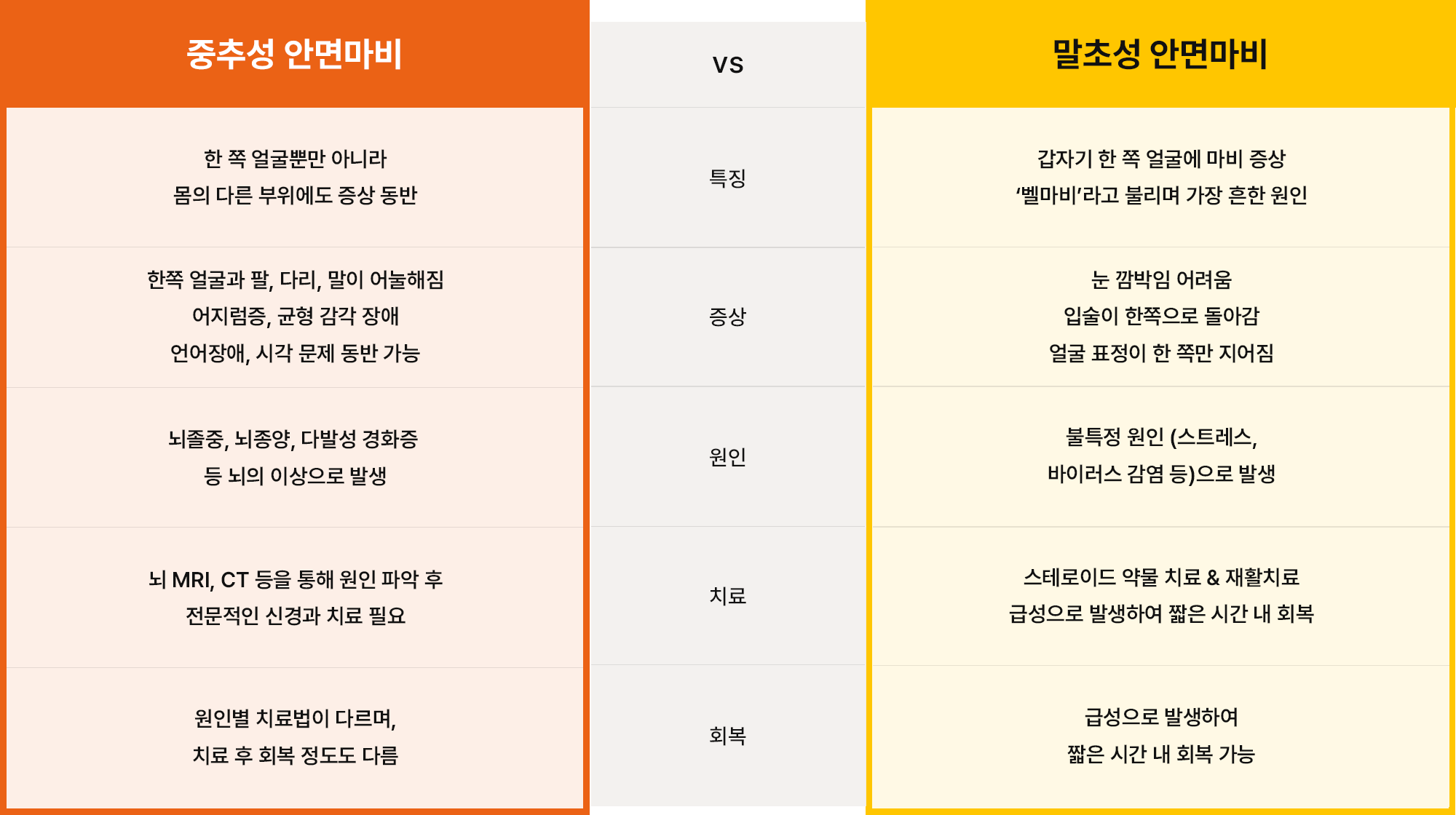
Central Facial Palsy vs.
Peripheral Facial Palsy
Check Point !
Central facial palsy and peripheral facial palsy
are treated in different ways.
Kwangdong Hospital clearly distinguishes between the two
and provides accurate, prompt treatment.

Diagnosis for Facial Palsy
Facial palsy testing
Together with a neurologist
We objectively assess the degree of facial palsy
and decide which treatment to carry out.
-
Detailed medical interview
-
Facial electromyography (EMG)
Examination -
Brain imaging test
(MRI, PET) -
Neurological examination
-
Nerve conduction study
Examination -
Blood test
Treatment for Facial Palsy
Treatment methods for facial palsy
Most cases of facial palsy are peripheral facial palsy.
With good early treatment, the chance of recovery can be increased
and after-effects minimized.
-


Steroid therapy
It can relieve inflammation
and help the nerve recover.
Starting treatment within 3 days of symptom onset
is important. -


Use of antiviral agents
When a viral infection
is the cause,
antiviral agents are effective. -


Facial exercise & rehabilitation therapy
Facial expression exercises, physical therapy and rehabilitation therapy
stimulate the paralyzed muscles and
restore function quickly. -

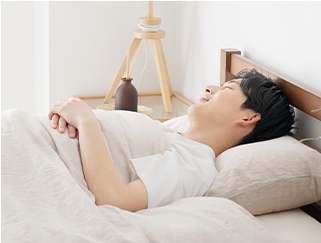
Sufficient rest
Through sufficient rest and sound sleep,
immunity is strengthened.
Causes of Numbness in Hands and/or Feet
Causes of numbness in the hands and feet
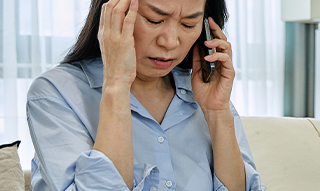
If numbness in the hands and feet has worsened, whether it is a warning sign of stroke,
peripheral neuropathy or a peripheral circulation disorder,
must be accurately determined by a neurologist.
-

Poor blood circulation
-
Stroke
-

Diabetic complications
-

Lumbar disc herniation
-

Alcohol addiction
-

Drug side effects
-

Guillain-Barré syndrome
-

Psychological factors
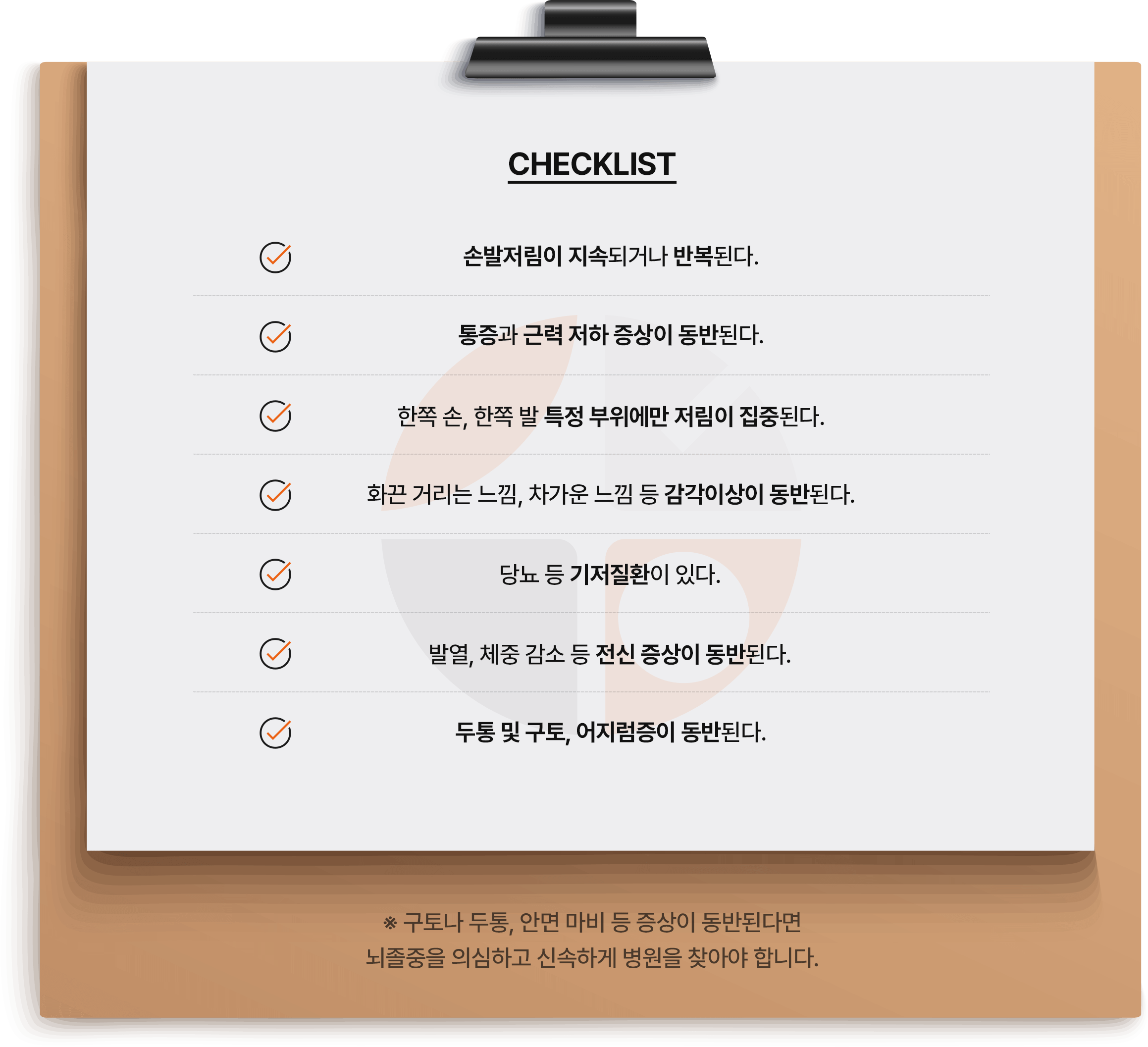
Numbness in the hands and feet:
when you should see a doctor
Check Point !

Diagnosis Test for Numbness
Tests for numbness in the hands and feet
Through a neurologist's careful diagnosis and a range of neurological examinations,
we find the exact cause of the numbness in the hands and feet.
-
Detailed medical interview
-
Neurological examination
-
Brain and spinal cord imaging
(MRI, MRA) -
Electromyography (EMG) test
-
Blood test
-
Nerve conduction study
Treatment methods for numbness in the hands and feet
Check Point !
Together with a neurologist
We accurately identify the cause of the numbness in the hands and feet
and establish a customized treatment plan based on the prognosis.
-


Drug therapy
Anticonvulsants, anti-inflammatory drugs,
analgesics, vitamin supplements and more:
medication prescribed according to the cause -


Surgical treatment
For nerve compression,
improvement of structural problems -


Use of braces
Wrist, neck and back braces and other supports
to relieve nerve compression -


Lifestyle correction
To promote blood circulation and
improve nerve function,
exercise and lifestyle improvement
Kwangdong Hospital
Peripheral Neuropathy Clinic —
What makes us special
Check Point!
KD Memory Impairment Clinic


01
- University hospital-level diagnostic equipment on site!
- Various imaging tests such as MRA, MRI and CT
allow us to
diagnose neurological disorders
at an early stage.
02
- Neurology, Rehabilitation Medicine
and Korean Medicine in integrated collaborative care! - Same-day integrated collaborative consultation across all three departments and
treatable
the only
neurology hospital.
03
- A former university professor,
Neurology specialists
in-person care! - A neurologist from Asan Medical Center
personally
provides careful, attentive care.
Accurate Diagnosis & Treatment for
Complex Brain Disorders
Difficult brain disorders,
diagnosed and treated correctly
Because the brain has such diverse functions, when disease occurs
symptoms vary by the location and type of the lesion.
At the Department of Neurology of Kwangdong Hospital, a neurologist who formerly served as a professor at Asan Medical Center provides care based on careful history taking, examination and precise testing,
We diagnose and treat difficult brain disorders correctly.
-
01


Extensive clinical experience
From headache and dizziness to dementia and stroke,
for brain disorders ranging from mild to severe,
based on extensive clinical experience,
we present treatment solutions. -
02

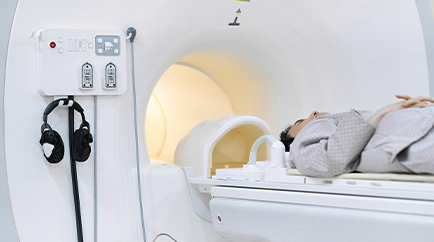
State-of-the-art precision diagnostic system
Through advanced imaging such as brain MRI, MRA and CT
and a range of neurological examinations,
we accurately diagnose everything from cause to symptom. -
03


Integrated collaborative care
Rehabilitation medicine, gastroenterology, Korean medicine and more:
multiple departments work together to provide
integrated treatment for neurological disorders.
Healthier brain, Healthier your later years
A promise for a healthy later life,
beginning with a healthy brain
For neurological disorders, prevention is the best treatment.
To manage disease efficiently, maintain a healthy brain
and prevent neurological disorders,
we provide holistic care from preventive screening to brain function treatment.


Neurologist, former professor at Asan Medical Center
Professor Kim Yeon-jeongprovides care in person


Consistent Neurological Research Activities
Ongoing neurological research
For continuous advancement, we take part in the neurology, stroke and dementia societies
and other academic societies on an ongoing basis.
-

[Are there genetic variants associated with the location
of cerebral artery lesions in stroke patients?] -

“Recurrent steroid-responsive cerebral vasogenic edema
in persistent migraine with persistent aura” -

[Effects of multicomponent exercise
on cognitive function in Korean older adults] -

“Location of cerebral atherosclerosis:
why do differences exist between East and West?” -

“Low-dose versus standard-dose intravenous alteplase
in bridging therapy for acute ischemic stroke:
the Korean ENCHANTED study”
-
[In stroke patients,
are there genetic variants
related to the location
of cerebral artery lesions?] -
“Recurrent steroid-responsive cerebral vasogenic edema
in persistent migraine with persistent aura” -
[On the cognitive function
of Korean older adults
on cognitive function in Korean older adults] -
“Location of cerebral atherosclerosis:
why do differences exist between East and West?” -
“Low-dose versus standard-dose intravenous alteplase
in bridging therapy for acute ischemic stroke:
the Korean ENCHANTED study”
University hospital-level medical system
University hospital-level testing and
care system in place
Check Point!


Comfortable and convenient
consultation and inpatient rooms
University hospital-level
diagnostic equipment

At every stage of testing and treatment,
specialist medical staff

Personalized
treatment programs